
NEWS
Thirty European leaders backed calls for an independent European Army, warning reliance on the United States is risky, fueling fears of NATO fractures and a major shift in global Western alliances.

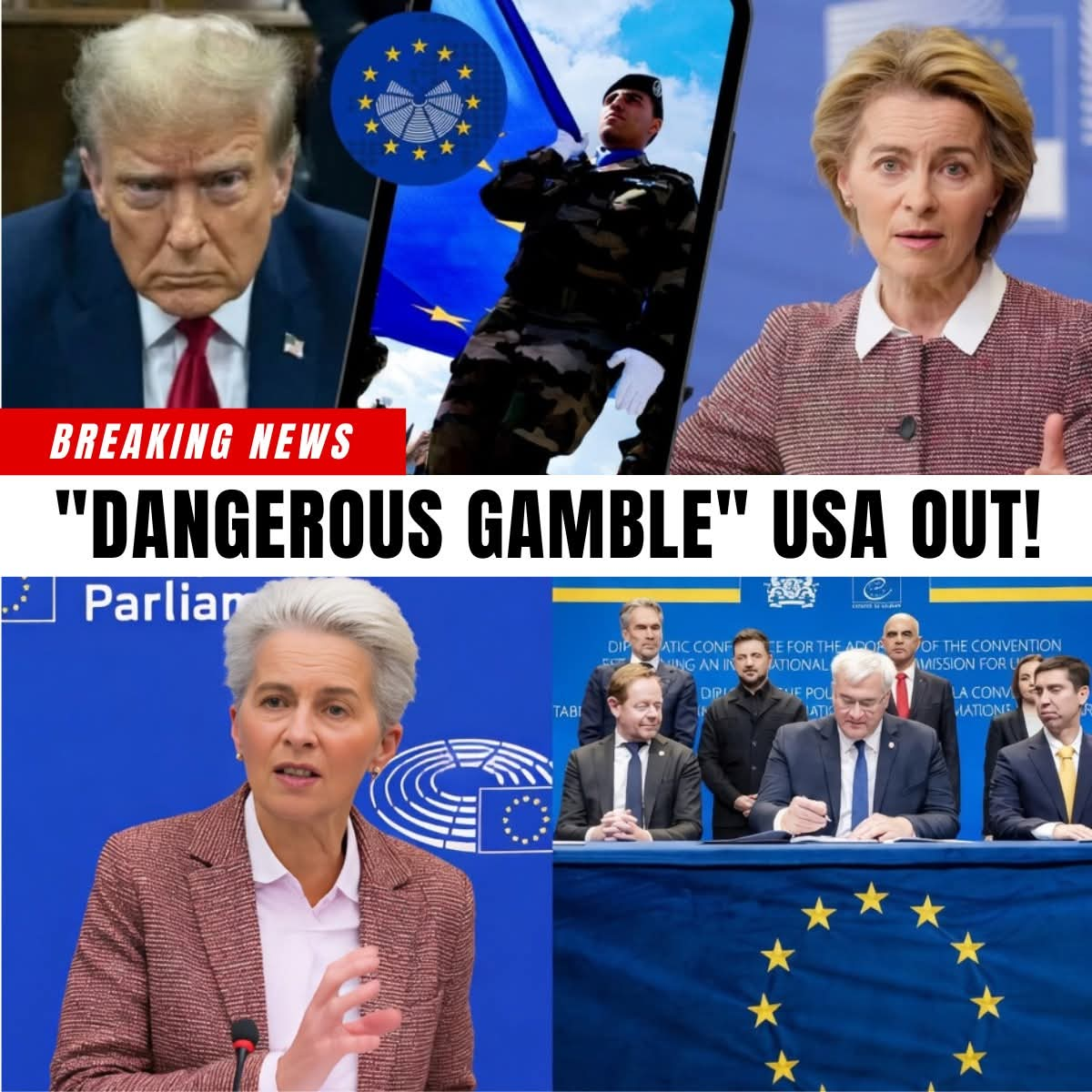
Europe’s Push for Military Independence Sparks Global Debate Over the Future of the Western Alliance
A growing political movement across Europe is reigniting one of the most controversial questions in modern geopolitics: Should Europe continue relying on the United States for its security, or is it time to build an independent military force capable of standing alone?
That debate intensified this week after a coalition of European lawmakers and political figures reportedly backed an open letter calling dependence on Washington a “dangerous gamble” and urging the creation of a fully coordinated European Army.
The proposal has triggered fierce reactions across both Europe and the United States, with supporters arguing that Europe must prepare for a future in which American military support can no longer be guaranteed. Critics, however, warn that such a move could weaken NATO and fracture the Western alliance at a time of rising global instability.
For decades, NATO has served as the cornerstone of European defense, with the United States providing the majority of military power, intelligence coordination, and strategic deterrence. But recent political tensions, disputes over defense spending, and growing uncertainty about future U.S. foreign policy have fueled concerns throughout Europe about overdependence on Washington.
Many European officials believe the continent remains militarily fragmented despite its economic strength. Analysts frequently point out that European nations operate numerous incompatible defense systems, including multiple tank platforms, fighter jet models, and command structures that complicate rapid coordination during crises.
One European lawmaker reportedly described the current situation by saying Europe resembles “a collection of bonsai trees instead of a single oak,” a remark that has quickly spread across political discussions online.
Supporters of a unified European force argue that consolidation would improve efficiency, strengthen Europe’s strategic autonomy, and allow the continent to respond faster to emerging threats without waiting for U.S. approval or assistance. Some also believe Europe must prepare for shifting geopolitical realities, including the growing influence of China, continued tensions with Russia, and uncertainty surrounding future American administrations.
The idea of a European Army is not entirely new. Similar proposals have surfaced repeatedly over the past two decades, especially after major international crises exposed divisions within NATO. However, the latest push appears to reflect a deeper anxiety about the long-term reliability of transatlantic alliances.
Opponents of the proposal caution that building an independent European military would face enormous political, financial, and logistical challenges. Defense policies differ widely across EU member states, and many countries remain strongly committed to NATO as the primary guarantor of European security.
Some experts also fear that duplicating NATO structures could create confusion and reduce military readiness rather than improve it. Others argue that any perception of European separation from the United States could embolden geopolitical rivals seeking to exploit divisions within the West.
Despite the controversy, the discussion signals a significant shift in European political thinking. What was once considered a fringe idea is increasingly being debated in mainstream policy circles.
Whether the proposal ultimately succeeds or not, one thing is becoming clear: Europe is reassessing its role in global security, and the future shape of the Western alliance may look very different in the years ahead.

Taylor Swift has urged her husband, Travis Kelce, to stop playing American football following his recent injuries during a match against Kansas City. She expressed her concern over his suffering and stated that she can no longer bear it. Additionally, she mentioned that she is pregnant and does not want a man with disabilities to father their child.

Travis Kelce made one significant catch in the first quarter before briefly leaving the game with an ankle injury.

🚨💔 JUST IN: Taylor Swift and Mama Kelce LEFT IN TEARS as Travis Kelce Suffers a Terrifying Ankle Injury During Chiefs vs. Falcons! Their Emotional Reactions Have Fans HEARTBROKEN — What Happened Next Has Everyone Holding Their Breath! 😱

Prince William and Prince George Join Taylor Swift at Mercedes-Benz Stadium in Atlanta to Cheer on Travis Kelce as the Chiefs Face the Falcons, and Their Unexpected VIP Suite Moment Has Everyone Talking!

Family Support on Display as Donna Kelce and Andrea Swift Pose Together With Chiefs Families at Mercedes-Benz Stadium

Donna Kelce and Taylor Swift’s Mom Andrea Swift Touch Down in Atlanta as Taylor Swift’s Mom Joins Travis Kelce’s Biggest Supporter Ahead of Chiefs’ Highly Anticipated Showdown Against the Falcons at Mercedes-Benz Stadium

Taylor Swift and Travis Kelce were not together last night. She was out alone while he was somewhere else. The relationship is starting to look fake. What do you think is going on? 💔

Fans Notice What Appears to Be a Baby Bump on Taylor Swift During a Low-Key Gym Outing With Travis Kelce — and One Sentimental Detail on His Hand Has Everyone Talking

🚨BREAKING: This video of President Trump is going viral due to amount of weight he appears to have lost and his youthful appearance. 78 is the new 28. AGING IN REVERSE!

“Viral Video of Two Guys Sharing a Sweet Neck Nuzzle at a Concert Is Melting Timelines”

‘Some people have strong feelings’: Why Harry and Meghan’s return has not led to the thawing they were hoping for… as insiders reveal how they’re being ignored and why they’ve not been invited to Charles’ birthday or Christmas
