
NEWS
“Incomplete and Misleading: Democrats Accused of Rigging Elections with Foreign Help, But the Real Story Goes Back to Henry Kissinger’s Game-Changing Policy Under Republican Leadership – Time to Face the Bipartisan Truth”

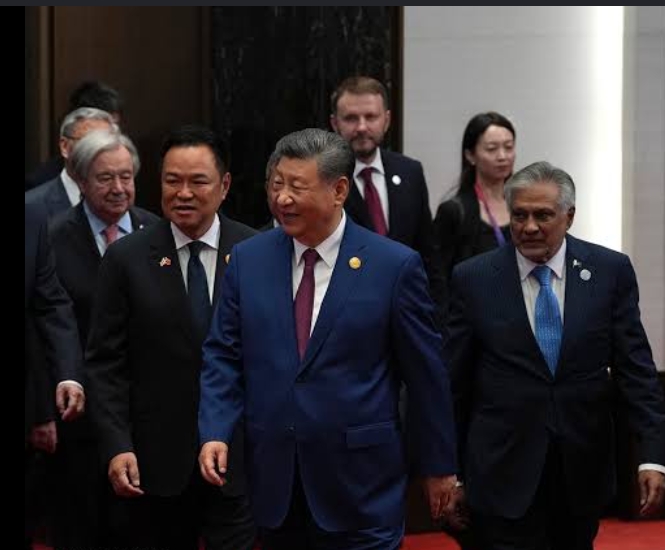
In the heat of political discourse, accusations fly fast. Recent claims from figures like Mike Davis, featured on Bannon’s WarRoom, spotlight alleged Democratic efforts to rig elections with assistance from foreign powers such as China. While concerns over election integrity and foreign influence deserve scrutiny, a social media post by @Makerbreakerpro
cuts through the partisan framing: the analysis is incomplete and therefore misleading. The uncomfortable reality is that deep U.S. engagement with China has been a bipartisan endeavor for more than half a century, beginning with landmark moves under Republican President Richard Nixon and his National Security Advisor Henry Kissinger.The pivot traces back to 1971–1972. Facing a complex Cold War landscape, Nixon authorized secret diplomacy that culminated in his historic visit to Beijing—the first by a sitting U.S. president to the People’s Republic of China. Kissinger made clandestine trips to lay the groundwork, including meetings with Chinese Premier Zhou Enlai.
These efforts produced the Shanghai Communiqué, which acknowledged differences on Taiwan while opening doors to normalized relations. “Ping-Pong Diplomacy” and eased travel and trade restrictions followed, fundamentally shifting U.S. strategy from containment to engagement. This was not a Democratic initiative; it was a bold Republican-led realignment aimed at countering the Soviet Union and reshaping global power dynamics.
Subsequent administrations, both Republican and Democratic, built on this foundation. Trade expanded dramatically, diplomatic ties formalized under Jimmy Carter, and economic integration accelerated through the 1990s and 2000s with China’s WTO accession under President Bill Clinton. Republican presidents like George W. Bush continued engagement while managing tensions. Even as strategic competition has intensified in recent years—with tariffs, technology restrictions, and military posturing under both Trump and Biden—the underlying web of economic interdependence, supply chains, and diplomatic channels reflects decades of shared policy choices across party lines.
Critics of one-sided narratives argue that focusing solely on current Democratic vulnerabilities ignores this longer history. Foreign influence concerns, including potential election interference, are serious regardless of the administration in power, yet they exist within a context of mutual benefits and risks cultivated over generations. Blaming one party alone overlooks how both have navigated—or at times profited from—relations with Beijing, from Kissinger’s opening to modern investment flows and policy decisions.Facing the bipartisan truth does not diminish legitimate worries about election security or Chinese assertiveness.
Instead, it calls for a more nuanced debate: one that examines systemic incentives, historical precedents, and consistent accountability rather than convenient partisan score-settling. As U.S.-China relations remain among the most consequential in the 21st century, understanding the full timeline—from Nixon’s handshake with Mao to today’s tensions—is essential for informed policy rather than selective outrage.

Donald Trump przez cały mundial pozostawał poza stadionami. Zmieniło się to dopiero podczas wielkiego finału Hiszpanii z Argentyną. Gdy prezydent USA pojawił się na ekranach MetLife Stadium, trybuny zareagowały natychmiast. Kamery uchwyciły też jego zachowanie w loży i nietypowy gest przy pucharze. Te sceny szybko stały się jednym z najgłośniejszych momentów początku spotkania.

Shakira & Burna Boy Ignite the World Cup Final: Explosive ‘Dai Dai’ Halftime Performance You Can’t Miss!

Shocking Miami Arrest: US Marshals Detain Tate Brothers Outside Bare-Knuckle Event as UK Files 38 Additional Rape and Trafficking Counts

Epic World Cup Drama Unfolds: Kylian Mbappé Leads France from a Stunning 4-0 Deficit Against England to 4-3, as He Breaks Messi’s Record – Can They Complete the Greatest Comeback Ever?

“He’s Innocent!” Paige Spiranac Defends Bryson DeChambeau After Stepping in Rough Sparks Cheating Accusations and Heated Ruling Dispute

Irański atak na bazę w Jordanii. Nie żyje dwóch żołnierzy USA

Polityczny przełom na Węgrzech. Prezydent podpisał ustawę, która usuwa go z urzędu.

Historyczny zwrot w sondażu CBOS. Tyle osób jest przeciw uchodźcom z Ukrainy .

Tyle wynosi obecnie emerytura Lecha Wałęsy. O takiej kwocie wielu może tylko pomarzyć

Iga Świątek z uśmiechem o finale mundialu. Wystarczyło jedno słowo!

Chelsea Pull Off Stunning £117m Hijack: Morgan Rogers Signs for Blues After Beating Arsenal to the Punch
