
NEWS
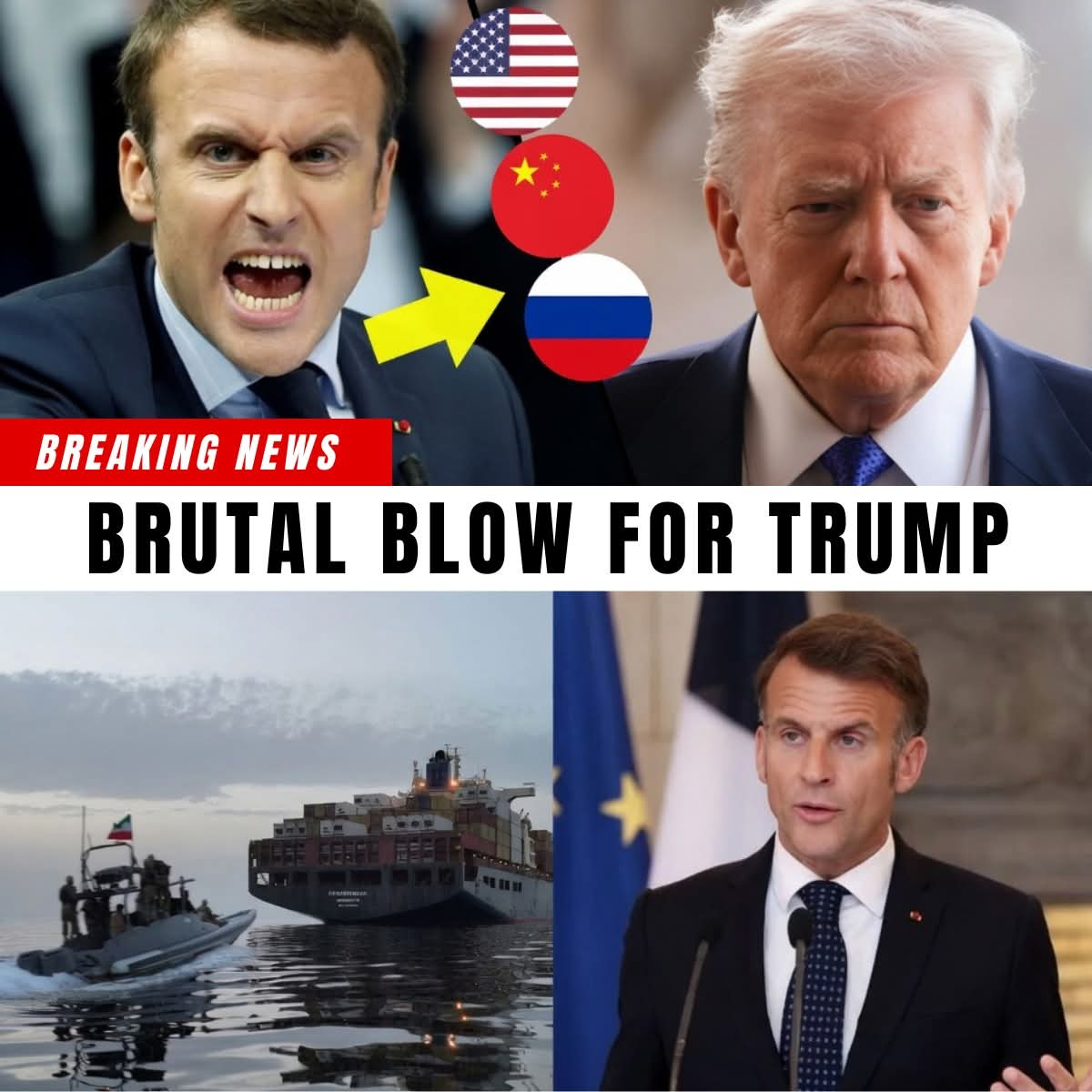
🚨Europe Signals Historic Break From Washington as Macron Warns EU Must Prepare for a Future Beyond American Dependence, Triggering Fears of a Major Geopolitical Realignment Across the Western Alliance🔥

Europe’s Strategic Shift: Why Trust Between Washington and Brussels Is Being Rewritten
For more than seven decades, the alliance between the United States and Europe has been one of the defining pillars of global stability. Built after World War II through NATO, economic cooperation, and shared democratic values, the transatlantic relationship shaped the modern Western world.
But today, that relationship is facing one of its most serious periods of tension in decades.
French President Emmanuel Macron recently reignited debate across Europe and Washington after warning that Europe can no longer depend entirely on outside powers for its security and long-term stability.
His remarks, which placed the United States alongside Russia and China in discussions about major global powers influencing Europe’s future, were viewed by many analysts as another sign that Europe is accelerating efforts to become strategically independent.
The comments did not emerge in isolation. They reflect a growing concern among several European governments that the global order is becoming more unstable and that Europe must prepare for a future in which American leadership may become less predictable.
A Growing Push for “Strategic Autonomy”
Over the last few years, European leaders have increasingly discussed the idea of “strategic autonomy” — the ability for Europe to defend its interests without relying heavily on Washington. This does not necessarily mean abandoning NATO or ending cooperation with the United States. Instead, supporters argue that Europe needs stronger independent capabilities in defense, energy, technology, and supply chains.
Several developments have accelerated this thinking.
The war in Ukraine exposed Europe’s dependence on American military support and intelligence. Meanwhile, tensions in the Middle East and concerns over instability in key global shipping routes have pushed European governments to rethink their security vulnerabilities.
Economic disputes, trade disagreements, and fears about political shifts in Washington have further fueled concerns about relying too heavily on one partner.
As a result, European Union member states are increasing defense spending, discussing joint military procurement, and investing in new security initiatives designed to operate with greater independence.
The Fear of Unpredictability
A major factor behind Europe’s strategic reassessment is uncertainty about future American foreign policy. European leaders across the political spectrum worry that changes in U.S. administrations can dramatically alter Washington’s commitments abroad.
Some European officials fear that future U.S. governments could reduce military support for allies, demand greater concessions in exchange for protection, or prioritize domestic politics over international alliances.
This concern has grown stronger amid debates in the United States about NATO spending and America’s global role.
For Europe, the issue is not necessarily hostility toward the United States. Instead, it is about reducing vulnerability.
Macron and others argue that Europe cannot remain dependent on decisions made in Washington if it wants to protect its own long-term interests.
Energy, Defense, and Economic Independence
Europe’s shift is not limited to military matters. Since the energy crisis triggered by the war in Ukraine, European governments have aggressively pursued alternative energy sources, expanded renewable investments, and sought to strengthen internal supply networks.
At the same time, European institutions are investing heavily in semiconductor production, digital infrastructure, satellite systems, and industrial policy in an attempt to compete more effectively with both the United States and China.
Defense cooperation is also evolving. Discussions about a stronger European defense identity have intensified, including proposals for joint rapid-response forces and expanded European weapons manufacturing.
While NATO remains central to European security, the long-term goal for many policymakers is clear: ensure Europe can act independently if necessary.
What This Means for the Global Order
The implications of this transformation could be profound.
If Europe becomes more strategically independent, the balance of power within NATO could change significantly. The United States may no longer dominate Western security decisions to the same extent it has since the Cold War.
A stronger European defense and industrial base could also reshape global trade, diplomacy, and military partnerships. Some analysts believe this could lead to a more multipolar world, where Europe acts as its own major geopolitical center rather than primarily as a U.S.-aligned bloc.
Others warn that weakening trust between Washington and European capitals could benefit rivals such as Russia and China, who have long sought to exploit divisions within the West.
A Historic Turning Point
Despite the tensions, the United States and Europe remain deeply interconnected economically, politically, and militarily. NATO cooperation continues, and both sides still share many strategic interests.
However, the tone of the relationship is changing.
What once seemed unquestionable — America’s permanent role as Europe’s ultimate guarantor — is now being openly debated by leaders at the highest levels.
Whether this becomes a temporary adjustment or a lasting transformation remains uncertain. But one thing is clear: Europe is preparing for a future in which it may need to rely far more on itself than at any point in the modern era.
And if that shift continues, the global balance of power could look very different in the years ahead.

Taylor Swift has urged her husband, Travis Kelce, to stop playing American football following his recent injuries during a match against Kansas City. She expressed her concern over his suffering and stated that she can no longer bear it. Additionally, she mentioned that she is pregnant and does not want a man with disabilities to father their child.

Travis Kelce made one significant catch in the first quarter before briefly leaving the game with an ankle injury.

🚨💔 JUST IN: Taylor Swift and Mama Kelce LEFT IN TEARS as Travis Kelce Suffers a Terrifying Ankle Injury During Chiefs vs. Falcons! Their Emotional Reactions Have Fans HEARTBROKEN — What Happened Next Has Everyone Holding Their Breath! 😱

Prince William and Prince George Join Taylor Swift at Mercedes-Benz Stadium in Atlanta to Cheer on Travis Kelce as the Chiefs Face the Falcons, and Their Unexpected VIP Suite Moment Has Everyone Talking!

Family Support on Display as Donna Kelce and Andrea Swift Pose Together With Chiefs Families at Mercedes-Benz Stadium

Donna Kelce and Taylor Swift’s Mom Andrea Swift Touch Down in Atlanta as Taylor Swift’s Mom Joins Travis Kelce’s Biggest Supporter Ahead of Chiefs’ Highly Anticipated Showdown Against the Falcons at Mercedes-Benz Stadium

Taylor Swift and Travis Kelce were not together last night. She was out alone while he was somewhere else. The relationship is starting to look fake. What do you think is going on? 💔

Fans Notice What Appears to Be a Baby Bump on Taylor Swift During a Low-Key Gym Outing With Travis Kelce — and One Sentimental Detail on His Hand Has Everyone Talking

🚨BREAKING: This video of President Trump is going viral due to amount of weight he appears to have lost and his youthful appearance. 78 is the new 28. AGING IN REVERSE!

“Viral Video of Two Guys Sharing a Sweet Neck Nuzzle at a Concert Is Melting Timelines”

‘Some people have strong feelings’: Why Harry and Meghan’s return has not led to the thawing they were hoping for… as insiders reveal how they’re being ignored and why they’ve not been invited to Charles’ birthday or Christmas
