
NEWS
🚨Congress “Unfit” Claims Ignite Constitutional Firestorm as Trump Faces Explosive 25th Amendment Debate, But No Verified Evidence Confirms Resolution Was Officially Passed, Triggering Nationwide Political Division and Intense Public Reaction 🇺🇸

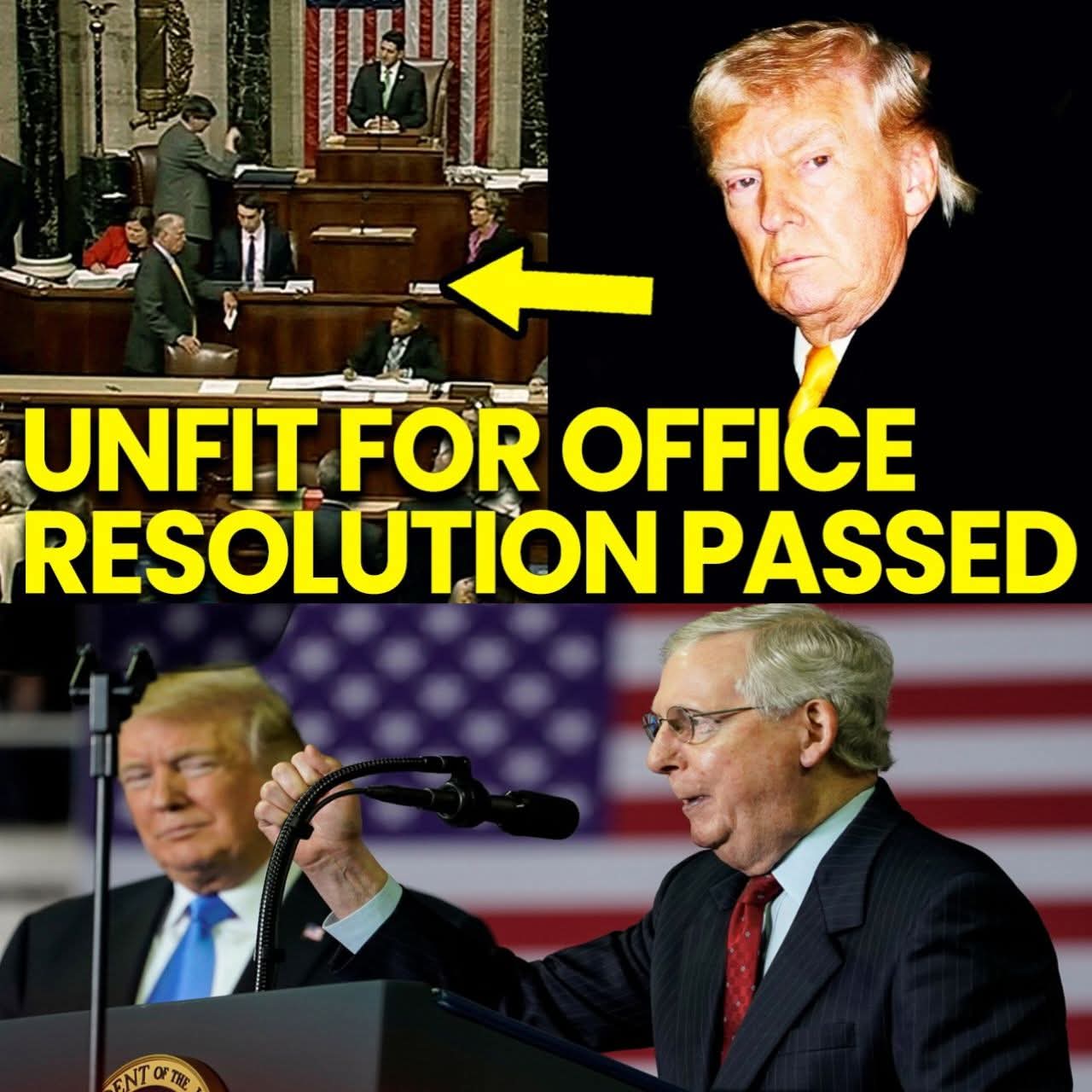
🚨Congress “Unfit for Office” Claims Spark National Firestorm — But Questions Remain
Washington, D.C. — Political tensions erupted across the United States after explosive claims circulated online alleging that Congress passed a resolution declaring Donald Trump “unfit” for office and urging action connected to the 25th Amendment of the Constitution.
The reports immediately triggered fierce debate across social media, cable news, and political circles, with supporters and critics of the former president clashing over what such a move would mean for American democracy.
According to the circulating commentary, the proposed resolution was described as historically significant because it would formally place Congress on record questioning whether Trump could properly carry out presidential duties. The discussion centered on two major constitutional mechanisms rarely mentioned together: impeachment and the 25th Amendment.
Under Section 4 of the 25th Amendment, the Vice President and a majority of the Cabinet can declare a president unable to discharge the powers and duties of office. If invoked, presidential authority can temporarily transfer to the Vice President. Congress also has constitutional authority to establish an independent body to evaluate presidential fitness, though such a process has never been fully implemented in modern history.
Supporters of the idea argue that raising the issue publicly creates political pressure on future administrations and establishes a historical record showing Congress was willing to question presidential fitness during moments of national concern.
Critics, however, warn that discussions surrounding the 25th Amendment can quickly become politically explosive. Some argue that using constitutional mechanisms in highly partisan environments risks deepening national divisions and weakening public trust in government institutions.
Despite the dramatic claims spreading online, there is currently no verified evidence that Congress officially passed a resolution declaring Trump unfit for office under the 25th Amendment. Much of the discussion appears rooted in political commentary, speculation, and interpretations of constitutional procedures rather than confirmed legislative action.
Legal experts note that the 25th Amendment was originally designed for situations involving clear presidential incapacity, such as severe medical emergencies, rather than ordinary political disagreements.
Because of that, any attempt to invoke it against a president or former president would likely trigger an unprecedented constitutional and political battle.
The controversy has once again highlighted how deeply divided the American political climate remains. For supporters of Trump, the discussion is viewed by many as another attempt to target a political figure who continues to dominate national politics.
For opponents, the conversation reflects broader concerns about presidential accountability and constitutional safeguards.
As the debate intensifies, one thing is clear: even the suggestion of declaring a president “unfit” carries enormous political consequences.
Whether viewed as constitutional oversight or political escalation, the controversy has reignited national conversations about power, leadership, and the future of American democracy.

Trump’s World Cup Backfire? As 4 Million Visitors Disappear and Canadian Travel Slumps, Questions Grow Over Whether Politics, Border Policies, and Reputation Could Undermine America’s 2026 Tournament Boom

Harry and Meghan’s Exit Story Faces Fresh Scrutiny as Claims of Last-Minute Palace Appeals Emerge, Raising Questions About Whether Their Royal Departure Was Truly Entirely Their Own Choice

South Park Rumors Ignite Online Frenzy as Fans Speculate Over Possible New Meghan Markle and Prince Harry Satire, Sparking Debate About Comedy, Celebrity Scrutiny, and the Sussexes’ Public Image

Prince Harry Reportedly Blames Prince William for Wedding Snub as Royal Rift Deepens, Sparking Debate Over Family Loyalty, Influence, and Whether Exclusion Was Protection or a Deliberate Power Move

Canada Eyes 140 Fighter Jets in Historic Defence Expansion That Could Transform the Nation’s Aerospace Industry and Create Thousands of High-Skilled Jobs

Diana’s Legacy at the Center of Reported Rift as Earl Spencer Blocks Harry’s Access to Private Archives, Raising Questions About Who Has the Right to Tell Her Story

Meghan Markle’s Reported Push for a Royal Title for Doria Ragland Sparks Questions Over Tradition, Influence, Timing, and Whether Family Recognition Has Become a High-Stakes Royal Negotiation

🚨☢️ Europe’s Quiet Nuclear Revolution Gains Momentum as France Expands Its Strategic Shield, Raising Questions About NATO’s Future, America’s Influence, and the Continent’s Pursuit of Greater Security Independence 🇪🇺

King Charles’ health battle has renewed hopes for reconciliation with Prince Harry. Reports suggest behind-the-scenes obstacles remain, but many believe time is running short for father and son to heal their relationship.

Europe Rushes to Secure Canadian Aluminum as Global Supply Chains Shift, Raising Questions About Whether U.S. Tariffs Are Strengthening Domestic Industry or Accelerating Canada’s Growing Strategic Trade Advantage Abroad.

🚨 Political Firestorm Erupts as Lawmakers Demand Trump Step Down or Face Impeachment Pressure, Igniting National Debate Over Accountability, Constitutional Authority, Future Elections, and the Direction of American Democracy 🇺🇸⚡
