
NEWS
🚨 Canada expands oil exports to Asia at global prices, reducing reliance on U.S. refiners and reshaping North American energy leverage as shifting trade routes pressure long-standing refinery advantages worldwide.

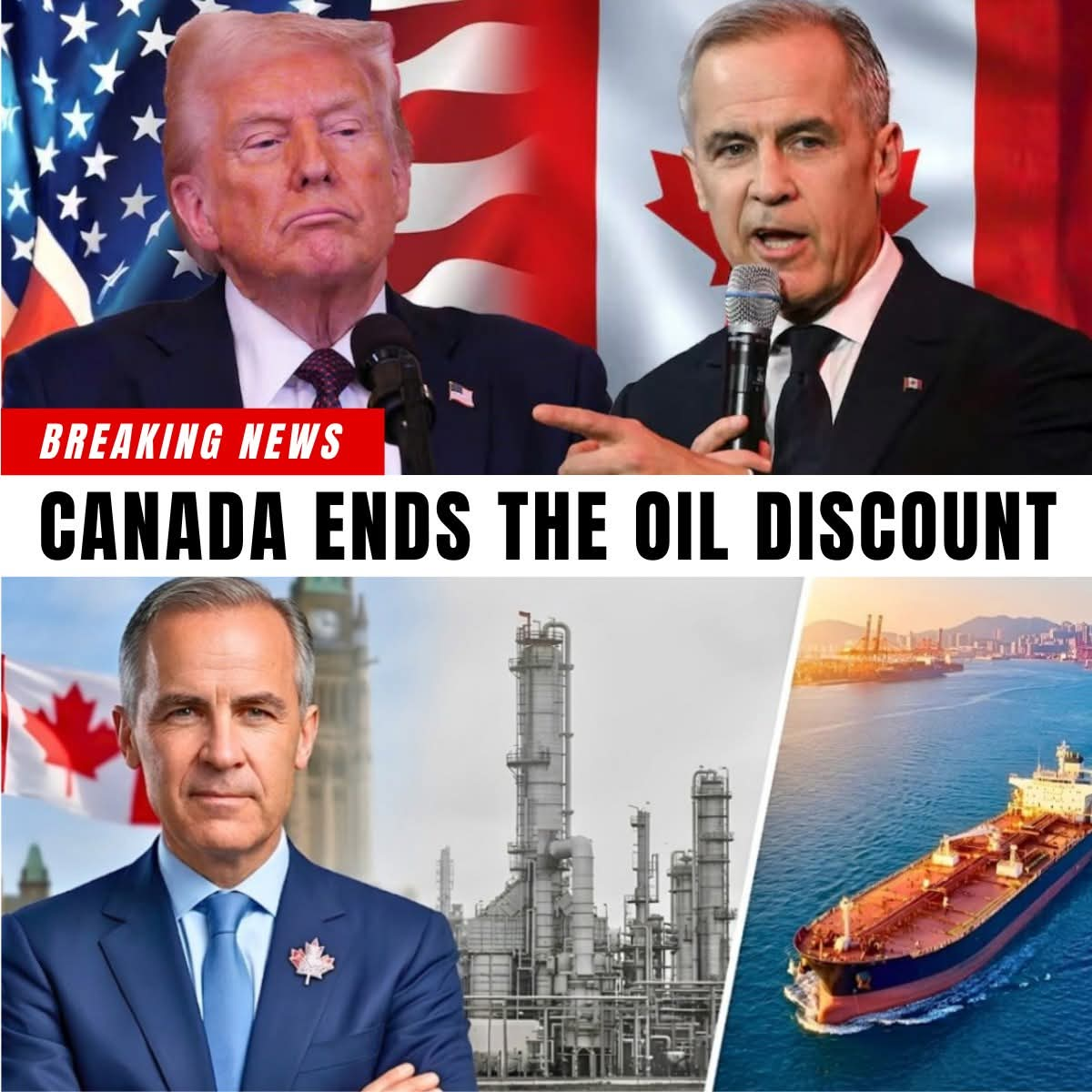
Canada’s Oil Pivot to Asia Is Reshaping North American Energy Power
For years, the North American energy relationship followed a predictable pattern: Canada produced vast amounts of crude oil, while the United States acted as the dominant buyer, processor, and exporter of refined products.
That arrangement gave American refineries a major competitive edge because Canadian oil often traded at a discount due to limited export options and heavy dependence on U.S. pipeline infrastructure.
Now, that balance is beginning to change.
Canada is steadily expanding its ability to access overseas markets, particularly in Asia, and the implications are drawing attention across global energy circles. With improved export infrastructure and growing Pacific access, Canadian producers are gaining the flexibility to sell crude closer to international market prices instead of relying almost entirely on U.S. buyers.
The shift is subtle, but potentially significant.
For decades, many U.S. refineries benefited from discounted Canadian heavy crude because Canada had limited alternatives. Pipeline bottlenecks and insufficient west coast export capacity often forced producers to accept lower prices in order to move supply south into the American market.
But as export routes improve, Canada is no longer as constrained. Asian economies — especially those with strong long-term energy demand — are becoming increasingly important customers. This diversification gives Canadian producers greater bargaining power and reduces the leverage historically held by American refiners.
Energy analysts say the development does not signal a collapse of U.S. refining competitiveness. The United States still possesses one of the world’s largest and most sophisticated refinery systems, along with deep financial markets and integrated energy infrastructure.
However, the pricing advantage tied to discounted Canadian crude could narrow over time if Canada continues expanding access to global buyers.
The broader issue is strategic optionality.
In energy markets, the ability to choose where resources are sold often translates into stronger pricing power and geopolitical influence.
Countries with limited export routes tend to accept weaker terms, while countries with diversified access can negotiate more aggressively and respond more flexibly to global demand shifts.
Canada’s evolving position reflects that reality.
This transition also highlights a larger global trend: nations are increasingly seeking diversified trade routes and reduced dependence on single-market relationships. From liquefied natural gas projects to critical minerals and crude exports, governments are investing heavily in infrastructure that broadens market access and strengthens economic resilience.
For North America, the implications could be long term. Increased Canadian access to Asian markets may gradually reshape refinery economics, transportation flows, and regional energy negotiations.
It could also strengthen Canada’s role as a more independent global energy supplier rather than primarily a continental one.
The transformation is not happening overnight, and many challenges remain, including environmental concerns, infrastructure costs, market volatility, and geopolitical uncertainty.
Yet the direction is becoming clearer: Canada is moving from dependency toward diversification.
And in global energy politics, diversification often changes the balance of power.

Taylor Swift has urged her husband, Travis Kelce, to stop playing American football following his recent injuries during a match against Kansas City. She expressed her concern over his suffering and stated that she can no longer bear it. Additionally, she mentioned that she is pregnant and does not want a man with disabilities to father their child.

Travis Kelce made one significant catch in the first quarter before briefly leaving the game with an ankle injury.

🚨💔 JUST IN: Taylor Swift and Mama Kelce LEFT IN TEARS as Travis Kelce Suffers a Terrifying Ankle Injury During Chiefs vs. Falcons! Their Emotional Reactions Have Fans HEARTBROKEN — What Happened Next Has Everyone Holding Their Breath! 😱

Prince William and Prince George Join Taylor Swift at Mercedes-Benz Stadium in Atlanta to Cheer on Travis Kelce as the Chiefs Face the Falcons, and Their Unexpected VIP Suite Moment Has Everyone Talking!

Family Support on Display as Donna Kelce and Andrea Swift Pose Together With Chiefs Families at Mercedes-Benz Stadium

Donna Kelce and Taylor Swift’s Mom Andrea Swift Touch Down in Atlanta as Taylor Swift’s Mom Joins Travis Kelce’s Biggest Supporter Ahead of Chiefs’ Highly Anticipated Showdown Against the Falcons at Mercedes-Benz Stadium

Taylor Swift and Travis Kelce were not together last night. She was out alone while he was somewhere else. The relationship is starting to look fake. What do you think is going on? 💔

Fans Notice What Appears to Be a Baby Bump on Taylor Swift During a Low-Key Gym Outing With Travis Kelce — and One Sentimental Detail on His Hand Has Everyone Talking

🚨BREAKING: This video of President Trump is going viral due to amount of weight he appears to have lost and his youthful appearance. 78 is the new 28. AGING IN REVERSE!

“Viral Video of Two Guys Sharing a Sweet Neck Nuzzle at a Concert Is Melting Timelines”

‘Some people have strong feelings’: Why Harry and Meghan’s return has not led to the thawing they were hoping for… as insiders reveal how they’re being ignored and why they’ve not been invited to Charles’ birthday or Christmas
