
NEWS
Byron Donalds Declares His Florida Governor Campaign Will Stay Laser-Focused on Gas, Groceries, Housing, and Insurance Costs While Ignoring National Political Battles

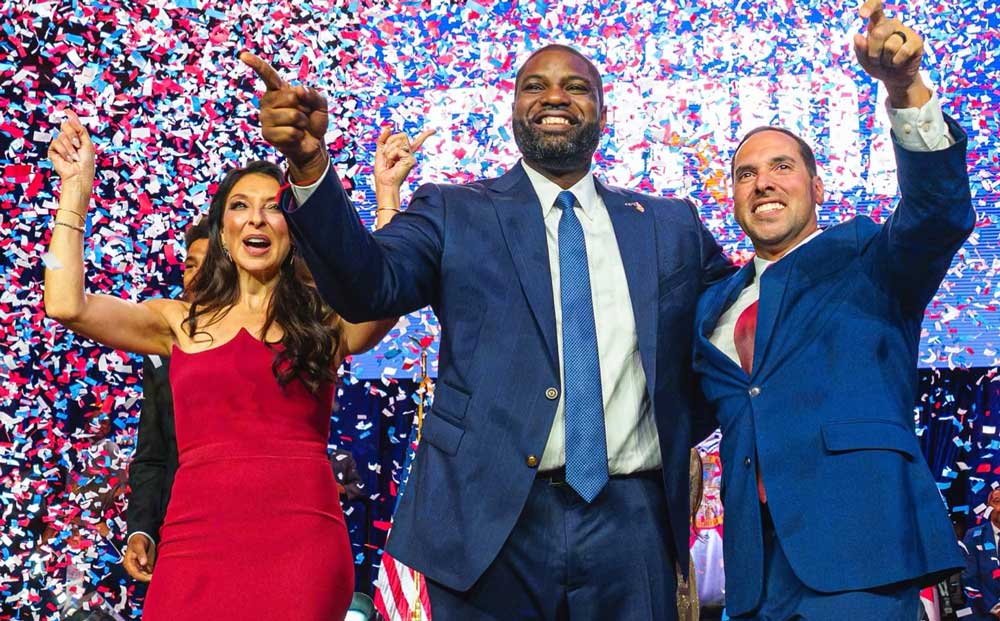
Florida Governor-elect Byron Donalds has made clear that his path to victory and his approach in office will remain centered on the everyday economic pressures facing Florida residents rather than the broader national political climate.
In an appearance on Fox News’ My View with Lara Lea Trump following the November 3 election, Donalds described his campaign as “laser-focused” on issues such as gas prices, grocery costs, housing affordability, and property insurance rates, while deliberately keeping its message “hyper-local.”The strategy, he said, reflected a deliberate choice to concentrate on the concerns of Florida voters instead of engaging in national partisan disputes.
Donalds credited Governor Ron DeSantis’ record of governance and the state’s continued population growth with helping Republicans withstand what he characterized as political headwinds on Election Day. Those headwinds were evident nationally, as Democrats made significant gains in the midterm elections; Florida’s results were closer than the Republican landslides of recent cycles, yet the party retained the governorship and other statewide offices.Donalds defeated Democratic nominee and former U.S. Representative David Jolly by a narrow margin, securing approximately 50 percent of the vote to Jolly’s roughly 48.7 percent.
The win makes Donalds Florida’s first Black governor and the first Black Republican elected governor in U.S. history. He will succeed the term-limited DeSantis in January 2027. Throughout the campaign, Donalds consistently identified affordability as the top priority for Floridians, a theme that aligned with voter concerns over rising costs of living.His stated plans for addressing those costs include protecting and building upon insurance reforms enacted under DeSantis, streamlining permitting processes to reduce housing construction expenses and accelerate post-storm rebuilding, and supporting property tax relief measures.
Amendment 3, which expands the homestead property tax exemption, passed with strong support and is expected to form part of the incoming administration’s early agenda. Donalds has also outlined efforts to improve transparency in government spending, maintain fiscal discipline, and continue policies aimed at expanding school choice and enforcing immigration laws at the state level.By emphasizing kitchen-table economics over national controversies, Donalds positioned his campaign as responsive to the immediate financial realities of Florida families and seniors on fixed incomes. He has indicated that this same focus will guide his priorities once in office, beginning with efforts to lower insurance premiums, ease housing costs, and improve the efficiency of state permitting and regulatory processes.
As Donalds prepares for the transition, the narrowness of his victory and the broader national environment underscore the challenges ahead. Florida’s status as a reliably Republican state held, but the margin was tighter than in recent years. For Donalds, the lesson of the campaign appears straightforward: sustained attention to the cost of living issues that dominate daily life for most residents offers a clearer path to political success in the state than engagement with distant national debates. Whether that approach continues to define his governorship will become clearer once the new legislative session begins and his administration begins translating campaign priorities into policy.

Taylor Swift has urged her husband, Travis Kelce, to stop playing American football following his recent injuries during a match against Kansas City. She expressed her concern over his suffering and stated that she can no longer bear it. Additionally, she mentioned that she is pregnant and does not want a man with disabilities to father their child.

Travis Kelce made one significant catch in the first quarter before briefly leaving the game with an ankle injury.

🚨💔 JUST IN: Taylor Swift and Mama Kelce LEFT IN TEARS as Travis Kelce Suffers a Terrifying Ankle Injury During Chiefs vs. Falcons! Their Emotional Reactions Have Fans HEARTBROKEN — What Happened Next Has Everyone Holding Their Breath! 😱

Prince William and Prince George Join Taylor Swift at Mercedes-Benz Stadium in Atlanta to Cheer on Travis Kelce as the Chiefs Face the Falcons, and Their Unexpected VIP Suite Moment Has Everyone Talking!

Family Support on Display as Donna Kelce and Andrea Swift Pose Together With Chiefs Families at Mercedes-Benz Stadium

Donna Kelce and Taylor Swift’s Mom Andrea Swift Touch Down in Atlanta as Taylor Swift’s Mom Joins Travis Kelce’s Biggest Supporter Ahead of Chiefs’ Highly Anticipated Showdown Against the Falcons at Mercedes-Benz Stadium

Taylor Swift and Travis Kelce were not together last night. She was out alone while he was somewhere else. The relationship is starting to look fake. What do you think is going on? 💔

Fans Notice What Appears to Be a Baby Bump on Taylor Swift During a Low-Key Gym Outing With Travis Kelce — and One Sentimental Detail on His Hand Has Everyone Talking

🚨BREAKING: This video of President Trump is going viral due to amount of weight he appears to have lost and his youthful appearance. 78 is the new 28. AGING IN REVERSE!

“Viral Video of Two Guys Sharing a Sweet Neck Nuzzle at a Concert Is Melting Timelines”

‘Some people have strong feelings’: Why Harry and Meghan’s return has not led to the thawing they were hoping for… as insiders reveal how they’re being ignored and why they’ve not been invited to Charles’ birthday or Christmas
